▶ God: One, eternal and absolute God
One God (Tawhid)
Islam is a monotheistic faith; it teaches that there is only one God. There are no other divine beings and it is a sin to compare God to other ‘false’ gods. Muslims reject the Christian belief that Jesus is the Son of God. The passage ‘He begetteth not, nor is he begotten’ (Qur’an 112:3) makes it clear that God has no children and he is not the child of anyone.
▶Risalah: prophethood
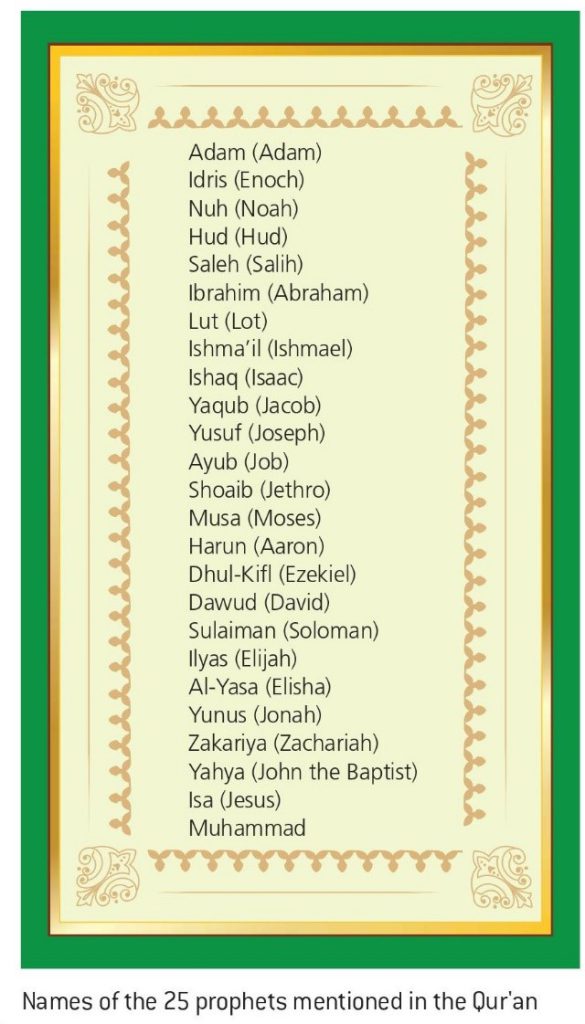
The channel of communication between God and humanity is called risalah; the prophets are our guides. They are human beings chosen to carry guidance from God to people, but their wisdom does not come from within themselves; it comes from God.
‘And We have already sent messengers before you and assigned to them wives and descendants. And it was not for a messenger to come with a sign except by permission of God . For every term is a decree.’ Qur’an 13:38
The Qur’an teaches that every generation has been given its own prophet, bringing God’s message in a book. The message brought by the Prophet Muhammad is essentially the same message as had been preached by all the prophets back to Adam: the need to worship the one, true God, who will be the judge of all.
‘And We send not the messengers except as bringers of good tidings and warners.’ Qur’an 6:48
‘People, no prophet or messenger will come after me, and no new faith will emerge.’ Muhammad’s last sermon (Hadith)
▶ Muhammad is the last and greatest prophet
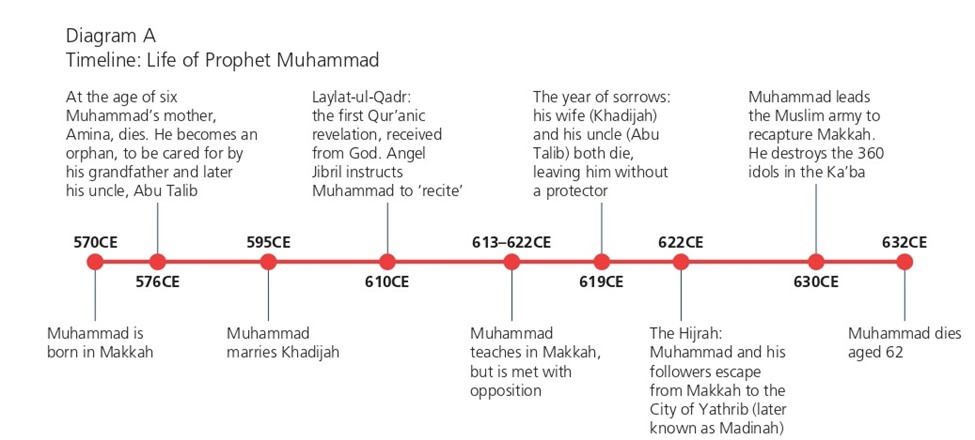
Muslims believe that through history, God has communicated to humans through revelations and the last and greatest of these revelations was given to the Prophet Muhammad. Muhammad did not come from a rich family and it is likely that he could not read or write. He was not a learned man or a scholar, but he was very devout. He would take himself off for days to meditate in a cave in the desert, seeking God. Muslims believe that God chose Muhammad as a prophet because he was a humble, honest man; a man he could trust with such a special message.
‘God chooses for Himself whom He wills and guides to Himself whoever turns back [to Him].’ Qur’an 42:13
■ Akhirah, the afterlife
For Muslims, this world, here on earth, is not all that there is. Our human existence will continue after death; our earthly life is just a preparation for the eternal life to come (Akhirah). Our mortal lives are a test and we will be judged according to how we have lived. As humans, we have been given free will, so we are able to make choices about what to believe and how to treat others. We will be held responsible for these thoughts and actions when God comes to judge us on the last day.
Every soul shall have a taste of death.’ Qur’an 3:185
▶ Day of Judgement: the test
Role of Prophets in Islam
On the Day of Judgement the Book of Deeds will be read, in which ‘every small and great thing is recorded’ Qur’an 54:52
▶ Judgement: heaven and hell
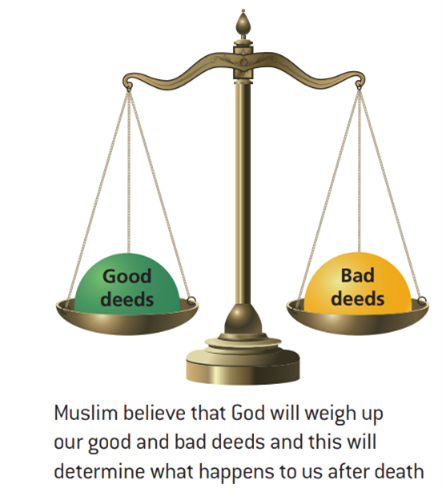
God weighs our deeds
God judges each person’s actions, but intentions (niyyah) are also taken into consideration.
▶ If the person has the intention to do a good deed, but was unable to carry it out, this is counted as a good deed.
▶ If they intended and carried out a good deed, this is counted as ten good deeds.
▶ If the person intended a bad deed, but did not do it, that is counted as a good deed.
▶ If they intended and carried out a bad deed, God records that as one bad deed.